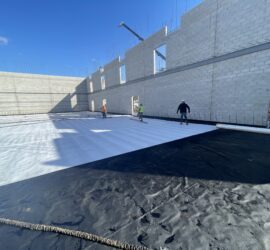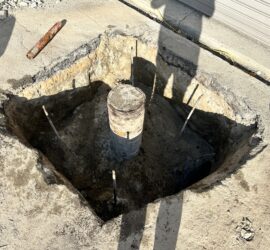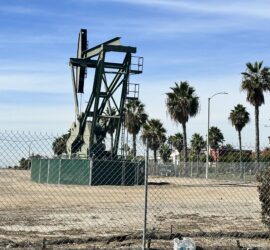
Control Panel for Methane Mitigation System

Control Panel in a Methane Mitigation System

Control Panel of a Methane Mitigation System: A methane mitigation control panel is the brain behind the active mitigation system. In accordance with the Los Angeles Department of Building and Safety (LADBS) Methane Code, Ordinance Number 175790, a control panel synchronizes methane alarm units with sensors and the active ventilation systems on-site. For instance, the control panel of a methane mitigation system activates the sub-slab soil vapor extraction system and HVAC system when high levels of methane soil gas occur.
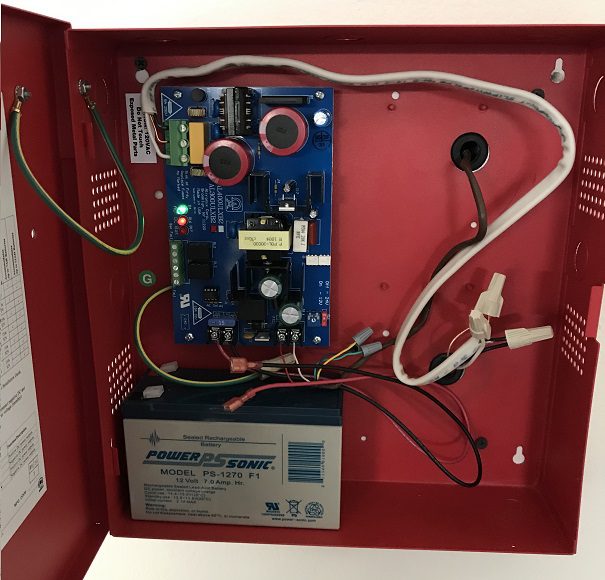

Alarm and Detector Control Panel and Backup Battery Methane Mitigation System

Similar Posts

  • Methane Mitigation Soil Gas Pressure Sensor

    Methane Mitigation Soil Gas Pressure Sensor Methane Mitigation Soil Gas Pressure Sensor: A Methane Mitigation Soil Gas Pressure Sensor is a device that measures and communicates sub-slab soil gas pressure to a methane control panel system. High levels of methane soil gas then trigger the integrated methane alarm system to notify occupants of danger. Much…

  • Leaking Underground Storage Tank (LUST)

    Leaking Underground Storage Tank (UST) Leaking Underground Storage Tank (LUST): A leaking underground storage tank (LUST) is a known case of hazardous liquid materials released into the environment, from within an underground storage tank (UST) source. The term “LUST” commonly applies to gasoline station soil contamination cases overseen by environmental regulatory agencies. Also See: Underground…

  • U-Shaped Kitchen

    U-Shaped Kitchen U-Shaped Kitchen: A U-shaped kitchen, or a horseshoe kitchen, is a general kitchen plan layout with counters, walls, and cabinets that generally form a square-like or rectangular-like shape of the letter “u.”  In the State of California (and other states with similar building code standards), U-shaped kitchens must have a minimum of 60-inches…

  • Intrusive Rocks

    Intrusive Rocks In the volcanology branch of geology, intrusive rocks are igneous rocks that form and crystallize under the Earth’s ground surfaces, within other geologic formations. In fact, intrusive rocks form by the process of magma shooting through pre-existing sedimentary, igneous or metamorphic rocks. For instance, a pegmatite dyke or a batholith. On the other…

  • Seismology

    Seismology Seismology: (seis·mol·o·gy) a branch of geology and geophysics that relates to earthquakes, including but not limited to their causes, effects, hazards, and mitigation techniques.  Seismologists at the United States Geological Survey (USGS) use cutting-edge technology to measure seismic wave properties and geological hazards that trigger them or are triggered by them. In turn, seismology…

  • Stratosphere

    Stratosphere Stratosphere: The stratosphere of a terrestrial planet is the second-lowest member of the atmosphere. On Earth, the stratosphere starts atop the troposphere at approximately 10 kilometers above mean sea level, and terminates roughly 50 kilometers above mean sea level. In fact, geologists understand that the Earth’s ozone layer exists within the stratosphere, which absorbs…